Free healthcare for low-income families is essential for ensuring accessible medical services, enhancing health outcomes, and alleviating financial stress, with various programs available to support these individuals.
Free healthcare for low-income families is a topic that touches on the wellbeing of entire communities. Have you ever wondered how this initiative impacts both individuals and society at large? Let’s explore the importance of this essential service.
Understanding the need for free healthcare
Understanding the need for free healthcare is crucial for everyone, especially low-income families. Access to health services can greatly improve the quality of life. Without affordable options, many families suffer from untreated illnesses.
The importance of healthcare accessibility
Healthcare access means more than just visiting a doctor. It includes preventive care, mental health services, and managing chronic conditions. When families have access, they can:
- Improve overall health outcomes.
- Reduce emergency room visits.
- Enhance productivity and quality of life.
Free healthcare can break down barriers that prevent families from getting the help they need. For example, children who receive regular check-ups are more likely to succeed in school. Furthermore, lower-income families often face high costs that can lead to tough choices between healthcare and other essential needs.
Economic benefits of free healthcare
Investing in free healthcare is not only a moral decision but also an economic one. Healthy families contribute to the economy by working and spending on goods and services. Moreover, when families avoid medical debt, they can direct funds toward education, saving, and home ownership. These positive cycles benefit society overall.
Communities that support free healthcare initiatives often see reduced rates of serious illnesses. This, in turn, lessens the burden on hospitals and healthcare systems. It’s a win-win situation that pays dividends for all.
As you can see, understanding the need for free healthcare highlights its multiple benefits. This system is essential for fostering healthier communities and ensuring no one is left behind.
Benefits of free healthcare for low-income families
The benefits of free healthcare for low-income families are vast and vital for the stability of communities. When healthcare is accessible, families experience better health outcomes. This reduces the strain of medical costs, which can lead to less financial stress.
Improved health outcomes
Free healthcare allows families to seek medical attention early, which can prevent more severe health issues in the future. Regular check-ups and preventive care help catch problems before they escalate.
- Fewer hospitalizations for preventable diseases.
- Better management of chronic conditions.
- Increased vaccinations among children.
When families can afford healthcare, they are more likely to address their health needs promptly. This proactive approach positively affects not just individual health but also community health.
Economic relief for families
High medical bills often push families into debt, making it hard to stay afloat. Free healthcare alleviates this burden, allowing families to allocate funds to other necessary areas like education and housing. A healthy family can:
- Work more consistently.
- Contribute to the community’s economic growth.
- Invest in their children’s future.
Moreover, families no longer need to fear choosing between health and financial stability. Access to free healthcare means they can focus on improving their quality of life.
This system enhances educational opportunities for children as well, since healthier kids tend to perform better in school. The overall prosperity of a community is tied directly to the health of its residents, highlighting the intersection of health and economics. These benefits collectively create a healthier, more resilient society.
How to access free healthcare services
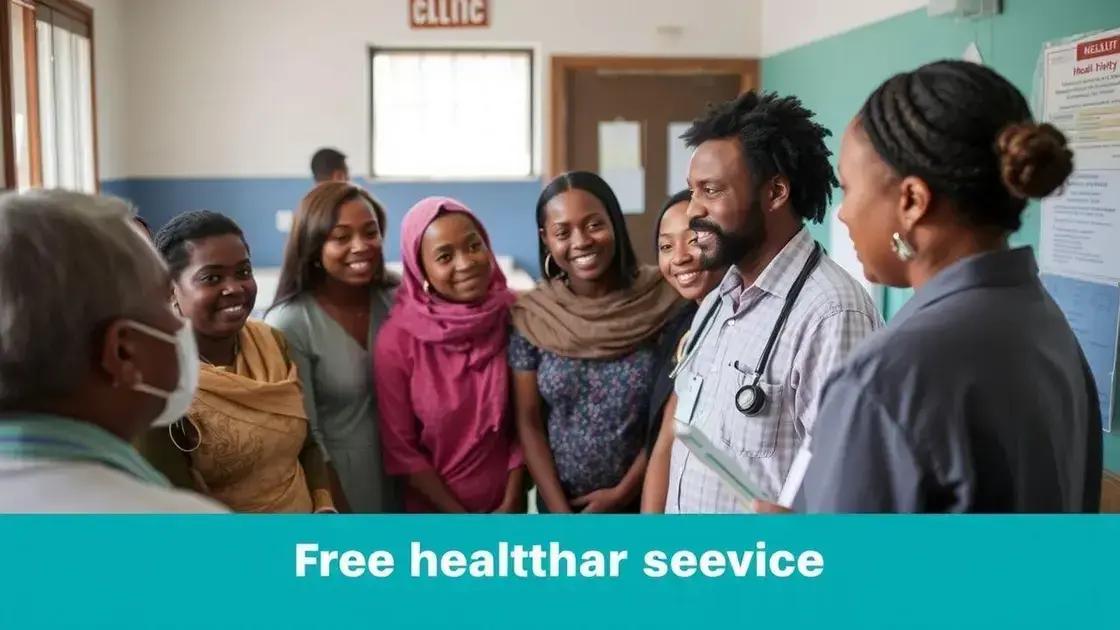
Knowing how to access free healthcare services is important for families in need. Many families may not be aware of the options available to them, making it essential to break down the steps to gain access.
Identifying local services
The first step is to identify local clinics and programs offering free healthcare. Many communities have resources, including:
- Community health clinics that offer low-cost or free services.
- Non-profit organizations that focus on health access.
- Government programs designed to assist low-income families.
By researching these options, families can find the care they need. Additionally, checking with local social services can provide further insights.
Understanding eligibility requirements
Next, it’s vital to understand the eligibility requirements for accessing free healthcare. Programs may have specific criteria based on income, family size, and residency. Most free or sliding-scale healthcare services require proof of:
- Income documentation to assess qualification.
- Identification and residency proof to ensure services are used appropriately.
- Medical history to guide appropriate care.
Completing these forms accurately is crucial. Families should not hesitate to ask for help if they have questions or find forms difficult to understand.
After gathering the necessary documents, families can contact the services directly. Scheduling an appointment is typically straightforward. Many clinics have walk-in hours, which allow immediate access to care. It is a good idea to keep a list of available times to ease any planning stress. Obtaining health insurance through state or federal programs can also provide additional pathways to free care. Families should be proactive and explore all available resources to support their health needs.
Challenges faced by low-income families in healthcare
Low-income families face several challenges in healthcare that can hinder their access to necessary services. These obstacles often create barriers that prevent families from seeking care when they need it the most.
Financial constraints
One of the biggest challenges is the high cost associated with healthcare. Even with free or low-cost services, many families struggle to pay for:
- Transportation to medical appointments.
- Medications that may not be covered by programs.
- Specialist consultations requiring out-of-pocket expenses.
These financial strains can deter families from pursuing healthcare, leading to deteriorating health conditions.
Lack of awareness
Another significant hurdle is the lack of awareness about available services. Many families do not know about community resources, programs, or even their eligibility for free healthcare. This gap in knowledge often results in:
- Missed opportunities for preventive care.
- Delayed treatment for chronic conditions.
- Increased reliance on emergency services.
Education plays a critical role in overcoming this challenge. Community outreach is necessary to inform families about their options and how to navigate the healthcare system effectively.
Additionally, stigma can create emotional barriers for low-income families. They may feel embarrassed or ashamed to seek assistance. This mindset can prevent them from accessing the care they desperately need, making it crucial to foster supportive community environments.
Supportive policies and community programs can help bridge these gaps, but overcoming these obstacles requires consistent efforts from both families and service providers. With the right information, resources, and support, low-income families can navigate their healthcare challenges more effectively.
Future of free healthcare initiatives
The future of free healthcare initiatives holds the promise of creating a more equitable system for all families. As discussions around healthcare reform continue, there is increasing recognition of the need to improve access to services for low-income individuals.
Innovative programs on the rise
Many new programs are emerging that aim to expand free healthcare access. Examples of these initiatives include:
- Telehealth services providing remote consultations.
- Mobile clinics bringing healthcare directly to underserved communities.
- Partnerships between local governments and non-profits to offer comprehensive care services.
These innovations can overcome logistical barriers that families often face, making it easier for them to receive the care they need.
Increased funding and policies
Another aspect of the future is the potential for increased funding for free healthcare initiatives. Advocacy for legislative changes is gaining momentum, with a focus on:
- Allocating state and federal resources for community health services.
- Supporting non-profit organizations that provide free care.
- Implementing policies aimed at ensuring equality in healthcare access.
Such measures may pave the way for more robust systems that cater to everyone, regardless of income.
Furthermore, community engagement is vital for the evolution of these initiatives. Involving families in the planning process ensures that their unique needs and concerns are addressed. This collaborative approach may lead to tailored programs that actually meet the demands on the ground.
The advancement of technology also plays a role in shaping accessible healthcare. Through digital platforms, individuals can learn about their healthcare options more easily. As the dialogue continues around these initiatives, the overall aim is clear: to create a sustainable healthcare system where free care is a reality for all.
FAQ – Frequently Asked Questions about Free Healthcare for Low-Income Families
What is free healthcare for low-income families?
Free healthcare for low-income families refers to medical services and support provided at no cost, ensuring access to essential healthcare for those in financial need.
How can low-income families access free healthcare services?
Families can access free healthcare services through community health clinics, non-profit organizations, and government programs designed for low-income individuals.
What challenges do low-income families face in accessing healthcare?
Low-income families often face challenges such as financial constraints, lack of awareness about available services, and stigma surrounding seeking help.
What is the future of free healthcare initiatives?
The future includes innovative programs, increased funding, and community engagement, all aimed at enhancing access to free healthcare for low-income families.