Presidential debate highlights reveal crucial moments and audience reactions that shape voter perceptions and candidate strategies, emphasizing the significance of fact-checking and effective communication in the electoral process.
Presidential debate highlights can be pivotal in shaping voter opinions and influencing the election outcome. Each debate presents a unique stage for candidates to showcase their strengths, address crucial issues, and connect with viewers. What were the standout moments this time around?
Top moments from the latest debate
The latest debates are always a spectacle, with top moments that can influence the minds of voters. Each candidate fights to showcase their best strengths, and this debate was no exception. As the candidates took the stage, audiences were eager to see which moments would be memorable.
Key Exchanges
One of the standout exchanges involved a heated discussion on healthcare. Candidate A emphasized the need for affordable care, while Candidate B challenged the effectiveness of the proposed plans. These moments not only highlighted their differences but also set the tone for voter perceptions.
Audience Reactions
The audience played a crucial role in the debate’s energy. Cheers and gasps filled the room during dramatic moments, and face reactions were telling. Below are some notable audience reactions that caught our attention:
- Applause during discussions of environmental policy.
- Visible shock at personal attacks made between candidates.
- Cheers for responses regarding education reform.
Another highlight from the debate was the moment when a candidate effectively used statistics to back their claims, which resonated well with the audience. Such moments help in creating relatable narratives that stick in voters’ minds.
Overall, the top moments from the latest debate will not only be discussed in hours but will be referenced in the coming months as the election unfolds.
Candidate strategies that stood out
During the recent debates, the candidate strategies that stood out captured the attention of viewers and analysts alike. Each candidate came prepared with specific techniques to connect with the audience and present their agendas effectively.
Appealing to Voter Interests
A key strategy involved addressing specific voter concerns, such as job creation and healthcare. Candidates who tailored their messages resonated more with the audience. For instance, Candidate X utilized personal stories to illustrate their policies, creating an emotional connection with listeners.
Using Data Effectively
Another notable approach was the use of statistics. Candidates who backed their claims with strong data had a significant advantage. They showcased facts that supported their arguments, making their points more persuasive:
- Candidate Y cited recent studies on job growth to strengthen their case.
- References to polls helped gauge public opinion on certain issues.
- Visual aids reinforced the information shared, making it easier for viewers to understand.
This method not only added credibility but also engaged the audience more effectively. By using concrete facts, candidates demonstrated their knowledge and readiness to tackle pressing issues.
A further tactic was the emphasis on personal branding. Candidates highlighted their unique personalities, which helped them stand out in a crowded field. Charismatic delivery and memorable slogans made a significant impact, fostering a sense of relatability among voters.
Throughout the debates, the strategies employed reflected the candidates’ individual styles and approaches. By focusing on what mattered to voters, utilizing data, and personalizing their image, candidates positioned themselves as viable options for leadership, enhancing their chances in the upcoming election.
Audience reactions and implications
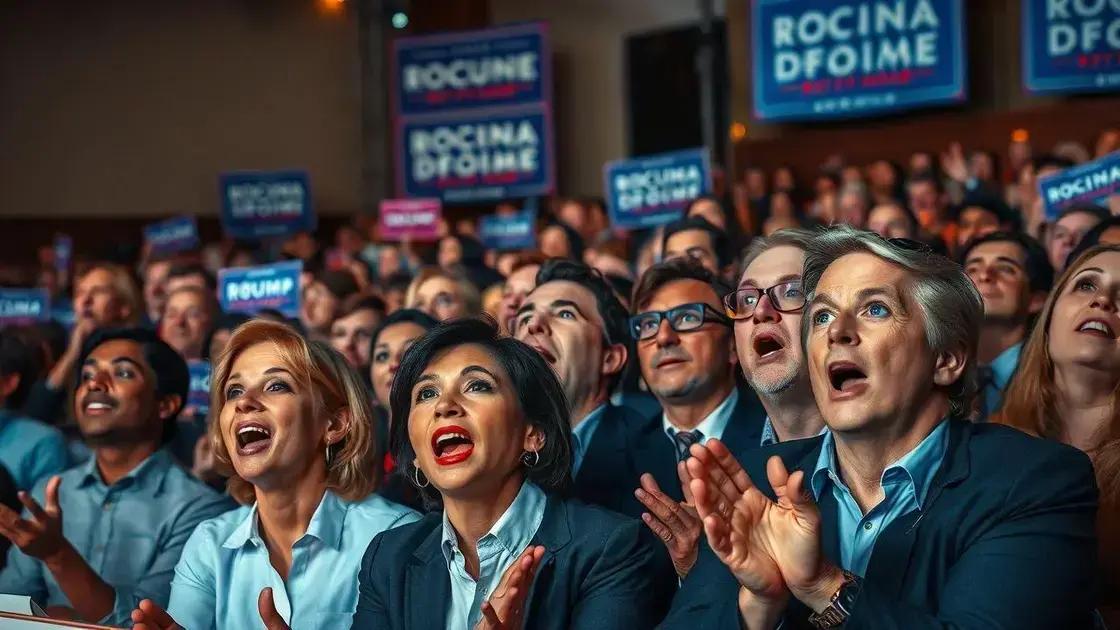
The audience reactions and implications during the debates play a crucial role in shaping the narrative. Each reaction can signal how well candidates connect with voters and highlight the effectiveness of their messages.
Real-Time Responses
Throughout the debates, audience members expressed their emotions openly. Whether it was cheers for a strong point or gasps for unexpected comments, these reactions created an electric atmosphere. The response for key moments often indicated which issues resonated the most:
- Applause followed statements on healthcare reform.
- Shocked reactions to personal attacks between candidates.
- Cheers when addressing education policies.
These real-time responses serve as valuable feedback for candidates. They show which topics are engaging and which strategies seem to fall flat, influencing how candidates approach future discussions.
Implications for Candidates
How the audience reacts can have significant implications for the candidates’ strategies moving forward. Strong audience engagement often translates to higher polling numbers and increased support. For instance, a candidate who evokes passionate reactions may see a boost in positive media coverage and public perception. On the other hand, a tepid response hints that their message may not resonate.
Moreover, candidates who can read and respond to the audience effectively are likely to gain an edge. Adapting their approach based on audience feedback isn’t just a tactic; it’s a necessary skill in the high-stakes world of politics. The candidates who excel in this ability often build a more significant connection with voters, fostering trust and enthusiasm.
Ultimately, the reactions of the audience during the debate serve as a mirror reflecting the candidates’ success in communicating their ideas. The impact is felt not just during the debates but also throughout the election cycle as candidates refine their messaging to align with what voters want to hear.
Fact-checking the key claims
Fact-checking the key claims made during the debates is essential for informing the public. As candidates present their ideas, it’s crucial to verify the accuracy of their statements. Many voters rely on this information to make informed decisions.
Importance of Fact-Checking
Fact-checking helps to maintain transparency and accountability. By examining the claims made, we can identify truths and expose inaccuracies that may mislead voters. It ensures that candidates are held responsible for their statements.
Key Claims and Their Accuracy
During the recent debates, several notable claims were made:
- Candidate A claimed that their healthcare plan would reduce costs by 30%. Fact-checkers found that the data supporting this statement was outdated.
- Candidate B asserted that crime rates had significantly dropped under their leadership. In fact, recent statistics showed only a slight decrease.
- Candidate C argued that their education policies led to an increase in graduation rates. Independent studies indicated that other factors played a more significant role in this achievement.
These findings reflect the complexity of political statements. It’s vital for voters to be aware of the context behind these claims and how they correlate with reality.
Additionally, public response to fact-checking can influence candidates’ messaging. When inaccuracies are revealed, candidates may adjust their narratives or face backlash from voters. This cycle illustrates how important fact-checking is not only for journalist integrity but also for the electoral process.
In summary, verifying statements made during debates sets a foundation for informed voting. It promotes a healthier democratic process where facts reign and misrepresentation is minimized.
Looking ahead: impact on the election
Looking ahead, the impact on the election from the recent debates is significant. Each moment, reaction, and statement can influence public perception and voter decisions. The impressions formed during the debates often last long after the cameras stop rolling.
Candidates’ Strategies Moving Forward
As candidates evaluate their performances, they will likely adjust their strategies based on audience feedback and fact-check analysis. By recognizing which topics resonated, they can tailor future messages to engage voters more effectively. For instance, if health care was a hot topic, candidates might focus more on their health policies in upcoming events.
Public Reaction Shaping Campaigns
The way the audience reacted during the debates can signal which issues are most important to voters. This feedback can lead to:
- Increased emphasis on popular topics, such as education and job creation.
- Changes in messaging if certain claims were fact-checked and disproved.
- Potential shifts in campaign advertisements to highlight successful debate points.
Furthermore, candidate popularity can rise or fall dramatically based on how well they performed in public view. Strong debate performances can boost morale among supporters while weak showings may prompt questions about viability.
Social media will also play a crucial role in shaping the conversation. Memes and clips from the debates can spread rapidly, influencing perceptions beyond the initial broadcasts. How candidates handle online reactions can further impact their standing as voters share opinions on various platforms.
In conclusion, the effects of the debates extend well into the election season. Candidates must remain agile, responding to feedback and refining their approaches as they strive to secure voter support. The strategy moving forward will be critical in determining their success at the polls.
FAQ – Frequently Asked Questions About the Impact of Debates on Elections
How do audience reactions influence candidate strategies?
Audience reactions provide immediate feedback on candidates’ messages, prompting them to adjust their strategies to better resonate with voters.
What role does fact-checking play in shaping voter opinions?
Fact-checking helps identify inaccuracies in candidates’ claims, allowing voters to make informed choices based on truth and accountability.
Why is it important for candidates to adapt their messaging?
Adapting messaging based on public sentiment ensures that candidates address the issues that matter most to voters, thereby increasing their chances of success.
How can social media impact the perception of candidates after a debate?
Social media amplifies reactions and highlights memorable moments from debates, influencing public perception and discussions around candidate performance.