The WIC application process provides crucial nutritional support for low-income pregnant women, new mothers, and young children by offering healthy food options, educational resources, and personalized counseling.
The WIC application process can feel overwhelming, but it’s a simple way to access essential nutritional benefits for you and your family. Curious about how to get started?
Understanding the WIC program
Understanding the WIC program is essential for families seeking nutritional support. The Women, Infants, and Children (WIC) program provides crucial resources to help ensure healthy development during key stages of life. With this program, eligible participants can access various benefits that promote a healthy lifestyle.
What is WIC?
The WIC program is a federal assistance initiative aimed at providing nutritional education and food assistance. It caters specifically to low-income pregnant women, new mothers, and young children under the age of five. This support is invaluable for maintaining proper nutrition during critical growth periods.
Key Benefits of WIC
Participating in the WIC program offers a variety of benefits that can significantly improve health outcomes.
- Access to nutritious foods, including fruits, vegetables, and whole grains.
- Nutritional counseling to help families make healthy choices.
- Health screenings to monitor growth and development.
- Referrals to healthcare services tailored to family needs.
Through regular visits, families not only receive food assistance but also guidance on how to make the best dietary choices. This holistic approach ensures that both mothers and children receive the essential nutrients needed for a healthy lifestyle.
The WIC program also provides educational resources, helping families learn about meal planning, food preparation, and making healthy decisions. This guidance empowers participants to take charge of their nutrition and overall well-being.
Eligibility criteria for WIC assistance
Understanding the eligibility criteria for WIC assistance is crucial for families seeking help. To qualify for the program, individuals must meet specific requirements that ensure those in need receive appropriate support. These criteria focus on income, residency, and nutritional risk.
Income Requirements
One of the primary factors determining eligibility is income. Families must have a household income at or below 185% of the federal poverty level. This threshold is adjusted annually, which means it’s essential to check the current limits.
Residency and Nutritional Risk
In addition to income, applicants must be residents of the state where they apply. WIC provides support based on local health resources, and being a state resident helps ensure access to these services. Furthermore, applicants must demonstrate that they are at nutritional risk, which can be identified through health screenings.
- Pregnant women
- Postpartum women within six months of delivery
- Breastfeeding mothers with infants up to one year
- Infants and children up to age five
In conclusion, understanding these criteria can help families determine their eligibility for WIC assistance. It’s a vital step that can lead to essential resources for healthy living.
Step-by-step guide to the WIC application process
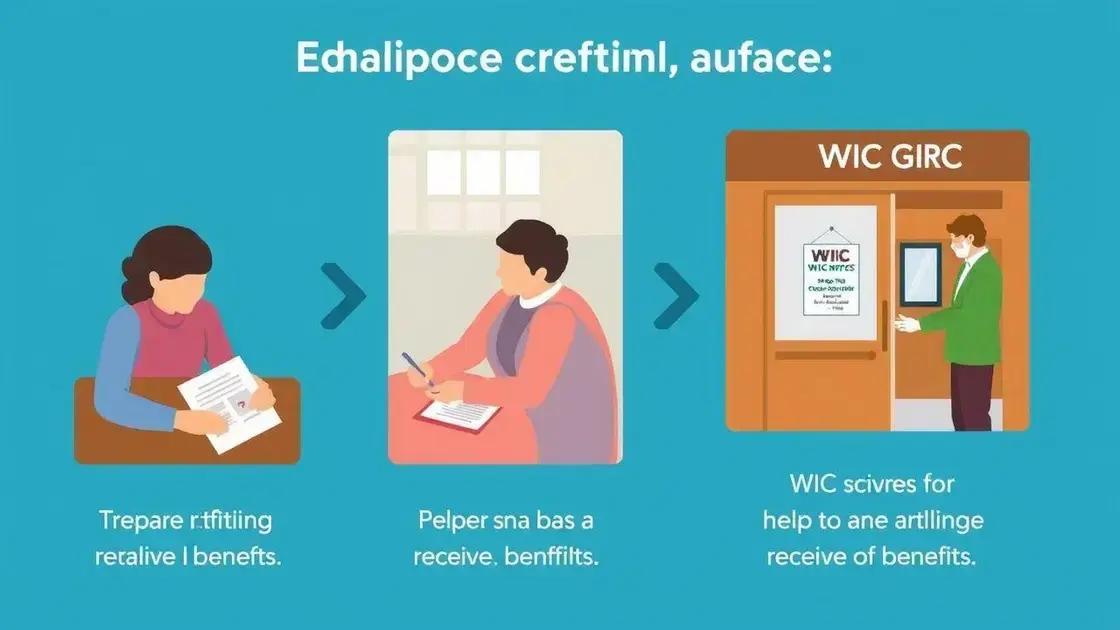
The WIC application process might seem daunting at first, but following a clear set of steps can make it easier. This guide will help you understand how to navigate the application and access your benefits.
Step 1: Gather Required Documents
Before applying, it’s important to collect all necessary documents. You will need proof of income, identification, and residency. Having these ready can streamline the process. Common documents include:
- Pay stubs or tax returns to prove income.
- Driver’s license or state ID for identification.
- A utility bill or lease agreement for residency verification.
Step 2: Find Your Local WIC Agency
Next, locate your local WIC agency. The WIC program operates through state and local offices, so it’s essential to identify the nearest one. You can find your local agency by visiting the official WIC website or calling a local health department.
Step 3: Schedule an Appointment
Contact your local WIC office to schedule an appointment. During this appointment, you will receive a health assessment. It’s a chance to ask questions and get personalized advice.
Step 4: Complete the Application
During your appointment, you will fill out an application form. This form collects important information about your household and nutritional needs. Be honest and thorough, as this helps in determining your eligibility.
Step 5: Receive Benefits
If approved, you’ll receive a WIC card or vouchers for approved foods. You will also schedule regular appointments to continue receiving WIC services. Remember to attend these appointments to maintain your benefits.
By understanding these steps in the WIC application process, you can confidently apply and ensure your family receives the nutritional support they need.
What to expect during a WIC appointment
Understanding what to expect during a WIC appointment can help reduce anxiety and ensure you are prepared. These appointments are designed to provide support and resources for families participating in the WIC program.
Arrival at the WIC Office
When you arrive at the WIC office, you’ll check in with the receptionist. It’s a friendly environment, so don’t hesitate to ask questions if you’re unsure about anything. They may ask for identification and your appointment details.
Health Assessment
After checking in, you will have a health assessment. This may include measuring your height and weight, as well as checking the health of any children being assessed. It’s important as it helps determine the nutritional needs of your family.
Nutritional Counseling
You’ll meet with a nutritionist who will discuss your family’s dietary habits. They will ask about what you typically eat and may provide advice on how to improve your nutrition. This counseling is personalized to fit your family’s needs.
- The nutritionist may cover topics like healthy food choices.
- They will provide tips on meal planning and budgeting.
- Expect to receive educational materials that you can refer to later.
Receiving Benefits
If you qualify, you will receive WIC benefits, which could include vouchers for purchasing healthy foods or a WIC card. This is a great way to help your family get the nutrition they need. You will also schedule your next appointment before leaving.
Understanding these aspects of your WIC appointment can ease any stress and help you make the most of your visit. Remember, the WIC staff is there to support you and your family’s health and nutrition needs.
Resources for further assistance with WIC
Accessing additional resources for further assistance with WIC can enhance the benefits you receive from the program. Various organizations and services are available to provide support beyond WIC.
Local WIC Offices
Your first step is to utilize your local WIC office. These offices not only manage applications but also offer workshops and classes that cover nutrition, parenting, and budgeting. Engaging with the staff can give you valuable insights and referrals.
Non-Profit Organizations
Many non-profit organizations focus on enhancing family nutrition and health. They often provide resources such as:
- Cooking classes to learn easy and healthy meal preparation.
- Food pantries that can help when you need extra support.
- Parenting support groups for sharing experiences and advice.
Online Resources and Hotlines
Numerous websites and hotlines can offer immediate assistance:
- The official WIC website has comprehensive information about eligibility, benefits, and local programs.
- Health hotlines can connect you to professionals for health advice and emergency support.
- Social media platforms may provide community support and updates on local food resources.
Exploring these resources can lead to a better understanding of available support systems. By tapping into these networks, you can enhance your family’s health and well-being while maximizing the benefits of the WIC program.
In summary, the WIC program offers invaluable support for families seeking nutritional assistance. By understanding the eligibility criteria, navigating the application process, and utilizing available resources, families can make the most of the benefits provided. Remember, the goal of WIC is to ensure that mothers and children receive the proper nutrition they need for a healthy future. With accessible information and community support, families can thrive and work towards better health outcomes.
FAQ – Frequently Asked Questions about the WIC Program
What is the WIC program?
The WIC program provides nutritional support and education for low-income pregnant women, new mothers, and young children, ensuring they receive essential nutrients.
How do I apply for WIC benefits?
To apply for WIC benefits, gather necessary documents, find your local WIC agency, and schedule an appointment to complete the application process.
What are the eligibility requirements for WIC?
Eligibility for WIC includes meeting income guidelines, being a resident of the state where you apply, and demonstrating a nutritional risk.
What resources are available to help with WIC?
There are many resources, including local WIC offices, non-profit organizations, cooking classes, and online support that can help maximize your benefits.